
 China
China

As people increasingly seek clean energy and strive to reduce their carbon footprint, solar lighting tower systems are becoming a popular solution for construction sites, mining areas, outdoor activities, emergency response, and off-grid applications. These systems rely primarily on solar power and do not depend on traditional fuel-based power generation; they not only reduce fuel consumption and lower operating costs but also provide reliable lighting.
Among the various components of a solar lighting tower, the battery plays a crucial role. It is responsible for storing the energy collected by the solar panels during the day and powering the lighting system at night or when there is insufficient sunlight. Proper maintenance of the battery is essential for ensuring stable system performance, extending its service life, and maximizing the overall efficiency of the lighting tower system.
1. Understand the Role of the Battery in Solar Lighting Towers
The battery is the core energy storage component of a solar lighting tower system. During daylight hours, solar panels convert sunlight into electrical energy, which is then stored in the battery via the charging system; when lighting is needed, the stored energy powers the LED lights, providing continuous illumination.
High-quality batteries ensure that solar lighting towers operate reliably even in harsh environments with limited sunlight. However, improper maintenance, extreme temperatures, or incorrect charging conditions can lead to a decline in battery capacity and shorten their service life.
2. Regularly Check Battery Condition
Regular inspections are one of the most effective ways to maintain battery performance. To ensure proper battery function, operators should regularly check the following:
• Battery appearance: Check for cracks, deformation, corrosion, or leaks.
• Battery terminals: Ensure the terminals are clean, dry, and securely connected.
• Cable connections: Check cables for signs of looseness, damage, or overheating.
• Battery indicators: Monitor the battery status through the control system (if equipped).
Early detection of potential problems helps prevent unexpected lighting outages and reduces maintenance costs.
3. Keep the Battery Clean and Protected
Over time, dust, moisture, and corrosion can affect battery performance, especially in outdoor applications such as construction sites, mining operations, and remote areas. To maintain battery reliability, please note the following:
• Regularly remove dust and dirt from the battery surface.
• Keep the battery compartment dry and properly protected.
• Remove corrosion from the terminals and apply appropriate protective treatment as needed.
• Avoid placing objects above or around the battery that could obstruct ventilation.
Keeping the battery environment clean and well-protected helps improve charging efficiency and operational stability.
4. Avoid Overcharging and Deep Discharging
Proper charge and discharge management is critical to maintaining battery health. Overcharging can cause overheating and accelerate battery degradation, while frequent deep discharges can reduce available capacity and shorten service life.
Modern solar lighting tower systems are typically equipped with smart controllers that automatically manage charging and energy distribution. Operators should ensure the system is functioning properly and avoid disconnecting or modifying battery-related components without professional guidance.
5. Consider Temperature and Environmental Conditions
Solar lighting towers are often deployed in harsh environments such as those with high temperatures, extreme cold, or high dust levels, and temperature fluctuations can significantly affect battery performance.
To improve battery reliability, please take the following measures:
• Avoid exposing the battery to unnecessary extreme heat.
• Ensure good ventilation around the battery compartment.
• Follow the manufacturer’s recommendations regarding operating and storage conditions.
• Conduct additional inspections after periods of extreme weather.
Proper environmental management helps maintain stable battery capacity and extend service life.
6. Monitor Solar Charging Performance
Since the battery depends on solar energy input, the charging performance of the entire system should also be monitored.
Operators should regularly check:
· Solar panel cleanliness and condition.
· Charging efficiency and controller status.
· Daily lighting duration and battery remaining capacity.
If solar panels are covered by dust, shadows, or debris, reduced charging efficiency may affect nighttime lighting performance and battery recovery.
7. Follow a Professional Maintenance Schedule
Although solar lighting towers generally require less maintenance than traditional fuel-powered lighting towers, professional inspections remain important for long-term operation.
A recommended maintenance schedule may include:
· Daily or weekly visual checks by operators.
· Periodic electrical inspections.
· Battery performance testing.
· Professional servicing based on operating conditions and usage hours.
Following a structured maintenance plan ensures that the system continues delivering reliable lighting when it is needed most.
Reliable Solar Lighting Solutions from AGG
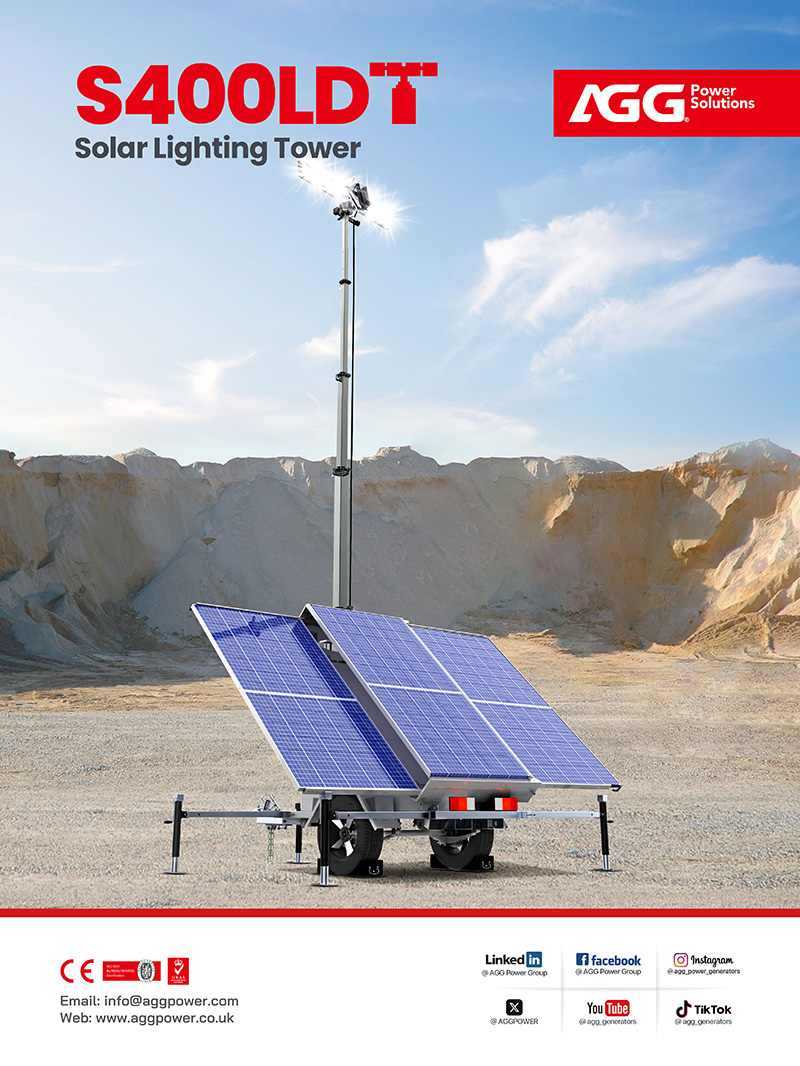
AGG solar mobile lighting towers are designed to provide efficient and reliable lighting solutions by utilizing solar radiation as the energy source. Compared with traditional lighting towers, AGG solar lighting towers require no refueling during operation, offering more economical and environmentally friendly performance. Designed with advanced energy storage technology, AGG solar lighting towers feature:
· Zero emissions and environmentally friendly operation
· Low noise and low interference performance
· Shorter maintenance cycles
· Solar fast-charging capability
· Battery capacity supporting up to 32 hours of continuous lighting
· Lighting coverage of up to 1,600 m² at 5 lux
By continuously investing in innovation, AGG is committed to developing clean energy solutions that help customers improve operational efficiency while reducing dependence on conventional fuels.
Beyond reliable products, AGG provides comprehensive service support throughout the product lifecycle. Customers can receive professional guidance through online and offline channels, including technical consultation, operation instructions, and maintenance recommendations. AGG also provides product training for customers and partners to help ensure proper operation and maintenance.
When required, AGG’s professional service teams can provide necessary onsite support to help customers solve technical challenges and maintain reliable system performance.
With advanced solar lighting technology and comprehensive customer support, AGG helps customers achieve dependable lighting solutions for a wide range of applications — anytime and anywhere.
Learn more about AGG: https://www.aggpower.com/
Email AGG for power support: [email protected]
Post time: Aug-06-2026